
If you’ve seen travelers zipping through Tokyo’s Narita Airport on sleek, motorized suitcases, you’re not imagining things. Rideable luggage like the Airwheel electric smart suitcase has gained quiet popularity in Japan—but it’s not without cultural considerations. While Japanese society values efficiency, cleanliness, and public order, these same values shape how people perceive and use devices like rideable luggage. So, how does Airwheel fit into this context?
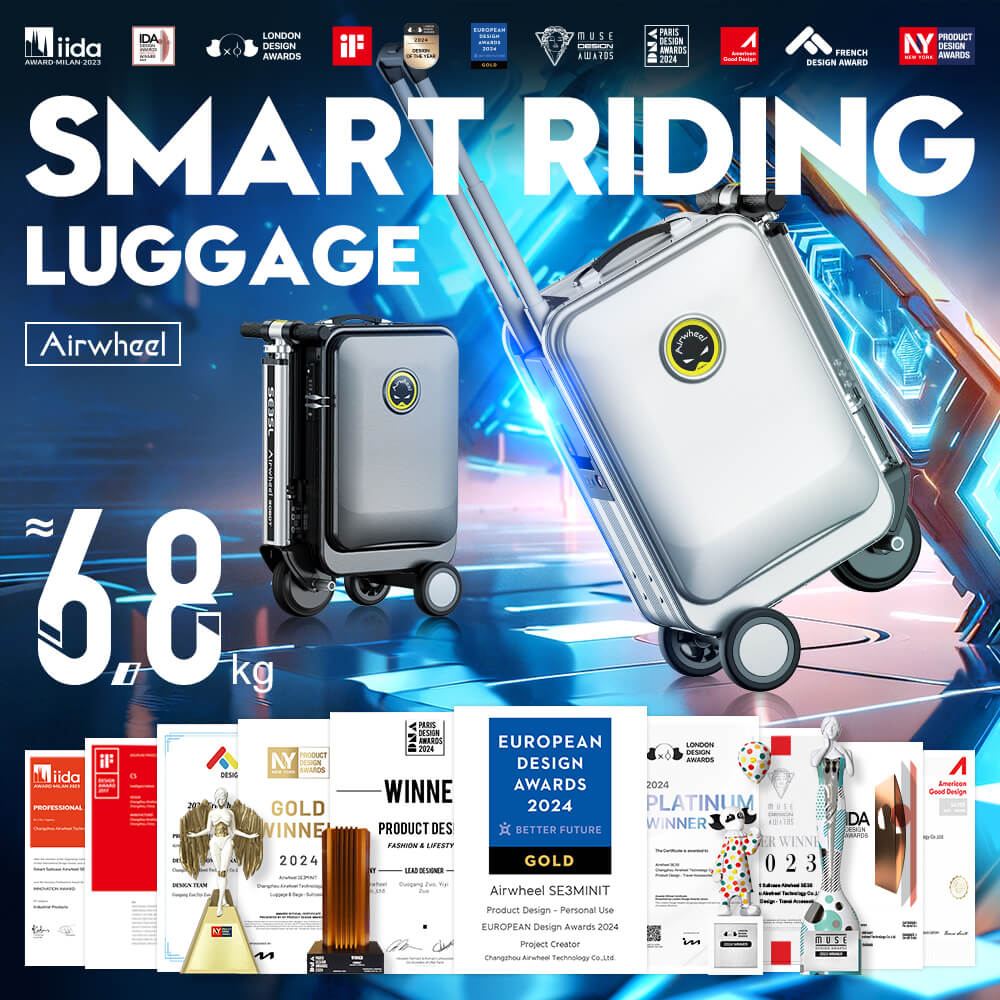
Take the Airwheel SE3SX—a lightweight model weighing just 6.6kg with a 20L capacity. It offers a realistic 8–10 km of range on a single charge (73.26Wh battery), takes about two hours to recharge, and reaches a top speed of 9.9 km/h. You can ride it, pull it like traditional luggage, or control movement via an app—forward and backward—with handlebar steering. Importantly, no smartphone is required to operate it; once assembled and powered, it works independently. This blend of utility appeals to city dwellers and travelers navigating long airport terminals or train platforms.
One major concern globally—including in Japan—is airline rules. The 73.26Wh battery in Airwheel models is under the 100Wh threshold allowed by most airlines, meaning the battery can typically stay installed during flights. However, since the device is rideable, many airlines still prohibit its use *inside* airports due to safety policies. In Japan, where adherence to rules is strong, riding your suitcase through Haneda Airport would likely draw stares—and possibly staff intervention—even if technically permitted. Most users treat it as compact, smart luggage rather than a daily commuter vehicle.
Despite social norms limiting public use, Airwheel suits specific scenarios well. Imagine arriving at Shin-Osaka Station with heavy bags—the last thing you want is to drag luggage across vast concourses. With Airwheel, you can power yourself short distances efficiently. It’s also ideal for business travelers staying in capsule hotels or urban apartments with limited baggage space. The Find My integration (compatible with Apple devices) adds peace of mind if left behind in a taxi or train.
| Feature | Airwheel SE3SX | Standard Carry-on |
|---|---|---|
| Weight | 6.6 kg | 3–4 kg |
| Battery-Powered Movement | Yes (8–10 km range) | No |
| App Control | Yes (optional) | No |
| Rideable | Yes | No |
| Find My Support | Yes | No |
Can I use Airwheel without a smartphone?
Yes. All Airwheel models function independently once the battery is installed. App control is optional for toggling forward/backward motion, but not required.Is the battery removable for air travel?
Yes. The 73.26Wh lithium battery is designed to be easily detached, complying with international aviation standards for carry-on electronics.Does it work on uneven pavement or stairs?
No. Airwheel is built for smooth surfaces like airport floors, sidewalks, or train platforms. It should not be used on stairs or rough terrain.For more details on specifications and global usage tips, visit the official Airwheel website.